
How Does the CE Certification Process Work Step by Step?
For manufacturers who want to place their products on the European Union market, the CE certificate and CE marking are among the most important indicators showing that a product complies with the relevant regulations. However, for many companies, the CE certification process may appear complex because it involves technical details.
In fact, with proper planning and expert support, the CE certification process can be carried out in a systematic and manageable way. By evaluating the product according to the correct regulations, preparing the necessary technical documentation, and performing the required tests, the CE marking process can be successfully completed.
In this article, we explain step by step how the CE certification process works in a clear and detailed manner.
What Is CE Certification?
CE certification is a conformity assessment process demonstrating that a product meets the requirements related to:
- health
- safety
- environmental protection
as defined by European Union directives or regulations.
After successfully completing this process, the manufacturer gains the right to affix the CE marking to the product. As a result, the product obtains the right of free movement within the European Economic Area (EEA) and can be legally sold in the European market.
Main Steps in the CE Certification Process
The CE certification process consists of specific technical and regulatory steps. Correctly implementing these steps ensures that the process proceeds smoothly.
1. Identifying the Applicable EU Legislation
The first and most critical step in the CE certification process is determining which European Union legislation applies to the product.
Some common regulations include:
- Machinery Directive / Regulation
- Low Voltage Directive (LVD)
- Electromagnetic Compatibility (EMC) Directive
- Construction Products Regulation (CPR)
- Medical Devices Regulations
Some products may fall under more than one EU directive or regulation simultaneously. Therefore, accurate regulatory analysis is one of the most important stages of the CE certification process.
2. Determining the Conformity Assessment Module
European Union legislation defines different conformity assessment modules depending on the product type and risk level.
Common conformity assessment modules include:
- Internal production control
- Type examination
- Product verification
- Quality assurance systems
For some products, the manufacturer may carry out the conformity assessment independently, while for higher-risk products a Notified Body may need to be involved in the process.
3. Conducting Risk Analysis
Risk analysis is mandatory in the CE certification process to ensure product safety.
Risk analysis includes evaluating:
- product usage scenarios
- potential hazards
- user safety considerations
- risk reduction methods
This work becomes one of the most important technical documents demonstrating the safety of the product design.
4. Performing Required Tests and Technical Evaluations
Various technical tests and evaluations may be required to prove that the product complies with the relevant regulations.
These tests may include:
- electrical safety tests
- EMC tests
- mechanical safety tests
- performance tests
In some cases, tests must be performed by accredited laboratories.
5. Preparing the Technical File
One of the most important documents in the CE certification process is the Technical File.
The technical file generally includes:
- product description
- design and manufacturing information
- risk analysis documents
- test reports
- applied standards
- user manuals and labeling information
This file may be requested by competent authorities during market surveillance and inspection activities.
6. Preparing the EU Declaration of Conformity
Another important step in the CE certification process is preparing the EU Declaration of Conformity.
With this declaration, the manufacturer officially states that:
- the product complies with the relevant EU legislation
- the manufacturer takes responsibility for the use of the CE marking
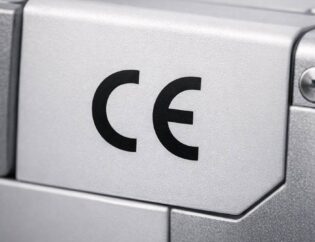
7. Affixing the CE Marking to the Product
After completing all conformity assessment steps, the CE marking can be placed on the product.
The CE mark must be:
- visible
- legible
- indelible
It can be placed on the product itself, its label, or its packaging.
Once this step is completed, the product can be legally marketed in the European Union.
Common Mistakes in the CE Certification Process
Certain mistakes during the CE certification process can lead to serious legal and commercial consequences.
The most common mistakes include:
- selecting the wrong legislation
- incomplete or incorrect technical documentation
- incorrect determination of the conformity assessment module
- invalid or unsuitable test reports
- incorrect use of the CE marking
Such errors may lead to serious consequences, including product recalls or legal penalties.
The CE Certification Process with Sertifike
At Sertifike, we support manufacturers in managing the CE certification process accurately, quickly, and reliably.
Within the scope of our CE certification services, we provide:
- product regulatory analysis
- determination of the appropriate conformity assessment module
- management of testing processes
- preparation of the technical file
- guidance on the correct use of the CE marking
Our goal is to transform the CE certification process into a fast, accurate, and sustainable system for companies.
When conducted with proper planning and technical expertise, the CE certification process becomes a systematic and manageable procedure. The CE certificate and CE marking play a critical role in ensuring that products can be safely placed on the European Union market.
A CE certification process carried out with expert support provides companies not only with regulatory compliance but also with strong commercial opportunities in international markets.
At Sertifike, we continue to support manufacturers in managing the CE marking process confidently and effectively.