CE Certification for Structural Steel and Aluminium Products
Structural sections, plates, hollow sections and aluminium products used in metal structures and composite steel-concrete structures are placed on the market with CE marking under Regulation (EU) No 305/2011, the Construction Products Regulation (CPR). Four harmonised standards are particularly relevant to manufacturers of these products: EN 10025-1, EN 10210-1, EN 10219-1 and EN 15088. This guide explains the scope of these standards, the characteristics declared in the Declaration of Performance (DoP), and the respective responsibilities of manufacturers and Notified Bodies under AVCP System 2+.
At a Glance
Structural metal products are subject to Assessment and Verification of Constancy of Performance (AVCP) System 2+. The manufacturer determines the performance of the product type, implements Factory Production Control (FPC), and prepares the Declaration of Performance (DoP). A Notified Body assesses the FPC system through an initial inspection and continuing surveillance and issues a Certificate of Conformity of Factory Production Control. The fabrication of structural steel components, however, is covered by a separate standard, EN 1090-1.
Four Standards, Four Product Groups
| Standard | Products Covered |
|---|---|
| EN 10025-1 | Hot-rolled structural steel products, including I, H and U sections, angles, plates, wide flats and bars. EN 10025-1 specifies general technical delivery conditions, while EN 10025-2 to EN 10025-6 establish requirements for specific steel grades. |
| EN 10210-1 | Hot-finished structural hollow sections made from non-alloy and fine-grain steels, including square, rectangular, circular and elliptical sections. |
| EN 10219-1 | Cold-formed, welded structural hollow sections made from non-alloy and fine-grain steels. |
| EN 15088 | Structural aluminium and aluminium alloy products used in construction works, including extruded sections, plates, castings and forgings. |
The individual parts of the EN 10025 series are organised according to steel type: non-alloy structural steels (Part 2), normalised fine-grain structural steels (Part 3), thermomechanically rolled fine-grain structural steels (Part 4), steels with improved atmospheric corrosion resistance (Part 5), and flat products of high-yield-strength structural steels in the quenched and tempered condition (Part 6). The harmonised standard forming the basis for CE marking is EN 10025-1, while the specific steel grade is defined in accordance with the relevant part of the series.
Material Production vs. Structural Fabrication: EN 10025 or EN 1090?
This distinction is one of the most frequently misunderstood aspects of CE marking in the structural steel industry:
- Material manufacturers (steel mills, tube and section manufacturers, and aluminium extrusion plants) prepare a Declaration of Performance (DoP) for the sections, plates or tubes they produce in accordance with EN 10025-1, EN 10210-1, EN 10219-1 or EN 15088.
- Structural steel fabricators manufacture structural components such as columns, beams and trusses by cutting, drilling and welding these materials. CE marking of these components is carried out in accordance with EN 1090-1.
Sertifike's Notified Body designation covers the material standards EN 10025-1, EN 10210-1, EN 10219-1 and EN 15088. Sertifike is not a Notified Body under EN 1090-1.
Characteristics Declared in the Declaration of Performance (DoP)
Annex ZA of the relevant standards identifies the essential characteristics of structural metal products. For steel products, the Declaration of Performance typically includes the following:
| Essential Characteristic | Description |
|---|---|
| Dimensional and shape tolerances | In accordance with the applicable dimensional standard (e.g., EN 10210-2 or EN 10219-2) |
| Yield strength | Minimum value according to the steel grade (e.g., 355 MPa for S355, depending on thickness) |
| Tensile strength | Specified minimum and maximum values |
| Elongation | Elongation at fracture |
| Impact energy | At specified temperatures (JR: +20 °C, J0: 0 °C, J2: −20 °C, K2: higher impact energy at −20 °C) |
| Weldability | Chemical composition and carbon equivalent value (CEV) |
| Durability | Chemical composition, including relevant alloying elements for steels with improved atmospheric corrosion resistance |
| Reaction to fire | Steel products are classified as Class A1 without the need for testing |
| Release of dangerous substances | In accordance with requirements applicable at the place of use |
For example, the designation S355J2+N indicates structural steel (S), a minimum yield strength of 355 MPa for thicknesses up to 16 mm, a Charpy impact energy of 27 J at −20 °C (J2), and a normalised or normalising-rolled delivery condition (+N). The information provided in the DoP must be consistent with the product's steel grade designation and inspection certificate.
For aluminium products covered by EN 15088, the declared characteristics include alloy and temper designations, mechanical properties (yield strength, tensile strength and elongation), dimensional tolerances and durability.
AVCP System 2+: Responsibilities of the Manufacturer and the Notified Body
Manufacturer:
- Determines the performance of the product type through testing or calculation.
- Establishes, documents and implements a Factory Production Control (FPC) system.
- Tests samples taken from production in accordance with the established testing plan.
- Prepares the Declaration of Performance (DoP) and affixes the CE marking.
Notified Body:
- Conducts the initial inspection of the manufacturing plant and its Factory Production Control system.
- Performs continuing surveillance, assessment and evaluation of FPC.
- Issues, restricts, suspends or withdraws the Certificate of Conformity of Factory Production Control.
Under AVCP System 2+, the Notified Body does not perform product-type testing. The document commonly referred to as a "CE certificate" in the construction products sector is the Certificate of Conformity of Factory Production Control, issued following the certification process.
Key Factory Production Control Requirements for Steel Mills and Section Manufacturing Plants
- Raw material and casting (melting) control: Verification of heat numbers for billets, slabs and coils, chemical analysis certificates and incoming material inspections.
- Traceability: Maintaining uninterrupted traceability from the heat number to the finished product, including product identification markings such as steel grade, heat number and manufacturer.
- Mechanical testing: Performing tensile and Charpy impact tests for each specified test unit (batch) at the frequencies required by the applicable standard.
- Dimensional inspection: Measurement of cross-sectional dimensions, straightness, twist and length tolerances, together with calibration of measuring equipment.
- Welded hollow sections (EN 10219-1): Non-destructive testing of weld seams and verification of the mechanical properties of the weld area.
- Inspection documents: Ensuring that documents issued under EN 10204 (e.g., Type 3.1 inspection certificates) are consistent with the DoP and relevant test records.
- Non-conforming products: Procedures for segregation, identification and reclassification of non-conforming products.
Are CE Marking and an EN 10204 Type 3.1 Inspection Certificate the Same?
No. An EN 10204 Type 3.1 inspection certificate is a commercial inspection document that provides test results relating to a specific delivery and is validated by the manufacturer's authorised inspection representative. CE marking and the Declaration of Performance (DoP), on the other hand, are regulatory requirements arising from the Construction Products Regulation and communicate the declared performance of the product type. These documents are not interchangeable and are frequently supplied together with the same shipment.
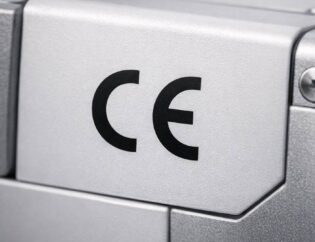
Example of a CE Marking Label
Illustrative CE marking label – Hot-Rolled Structural Steel
CE · 3228
Example Steel Profiles Ltd., [address]
26
DoP No.: EX-SS-001
EN 10025-1:2004 (steel grade according to EN 10025-2)
Hot-rolled structural steel for use in metal structures or composite metal-concrete structures
Steel grade: S355J2+N · Dimensional tolerances: [applicable standard] · Yield strength: [declared value] · Tensile strength: [declared value] · Charpy impact energy: 27 J / −20 °C · Weldability: CEV ≤ [declared value] · Reaction to fire: A1
For illustrative purposes only.
Temsilidir.
Common Mistakes
- Applying CE marking under the material standard EN 10025-1 to fabricated structural components, which should instead be assessed under EN 1090-1.
- Using an EN 10204 Type 3.1 inspection certificate in place of the Declaration of Performance (DoP).
- Allowing discrepancies between the steel grade marked on the product and the grade declared in the DoP.
- Breaking the traceability chain between the product and its DoP when materials are cut or relabelled at steel service centres.
- Failing to define weld seam inspection requirements in the FPC plan for products covered by EN 10219-1.
Frequently Asked Questions
EN 1090-1 and EN 10025-1 are standards covering different product categories. EN 1090-1 specifies conformity assessment requirements for structural steel and aluminium components used in construction works, whereas EN 10025-1 applies to hot-rolled structural steel products. If a company manufactures both structural steel materials and fabricated structural components, it must comply with the requirements of the relevant standard for each product category. An FPC certificate issued under EN 1090-1 does not replace certification under EN 10025-1. The necessary Declarations of Performance (DoPs) must be prepared for the respective products, and the applicable certification procedures must be completed.
EN 10210-1 covers structural hollow sections that are hot-formed or hot-finished through appropriate heat treatment following forming. EN 10219-1 applies to cold-formed, welded structural hollow sections. These differences in manufacturing processes may affect the mechanical properties, dimensional tolerances and production control requirements of the sections. During the CE certification process, manufacturers must ensure that their products are assessed under the appropriate standard, the relevant performance tests are carried out, and the Factory Production Control (FPC) system is established in accordance with the manufacturing method.
EN 15088 applies to structural aluminium and aluminium alloy products used in construction works. This standard covers the relevant performance characteristics of extruded profiles, plates and other structural aluminium products. Manufacturers must assess alloy and temper designations, mechanical strength properties and dimensional tolerances against the applicable requirements. However, where aluminium profiles are fabricated into structural components such as columns, beams or similar assemblies, EN 1090-1 becomes relevant. It is therefore essential to establish whether the product is a structural material or a fabricated structural component before initiating the certification process.
No. Under AVCP System 2+, the manufacturer is responsible for conducting the tests required to determine the performance of the product type. Characteristics such as tensile strength, yield strength and Charpy impact energy are determined using the methods specified in the applicable standards. Testing may be performed in the manufacturer's laboratory or by a suitable external laboratory, provided the necessary technical conditions are met. The Notified Body assesses the Factory Production Control (FPC) system, verifying that testing is conducted according to the established plan and that results are properly recorded and evaluated. A Certificate of Conformity of Factory Production Control is issued once the applicable requirements have been satisfied.
Yes. Distributors placing structural steel or aluminium products on the market are responsible for checking that the products bear the required CE marking and that the relevant Declaration of Performance (DoP) is available. Maintaining product identification and traceability is also important. If a distributor places a product on the market under its own name or trademark, or modifies it in a way that may affect its declared performance, the distributor may assume the obligations of a manufacturer. In particular, when products are cut, relabelled or combined from different batches, consistency between product markings, the DoP and inspection documents must be maintained.
CE marking is mandatory for structural steel and aluminium products placed on the market for use in construction works when they fall within the scope of the relevant harmonised standards. Products covered by EN 10025-1, EN 10210-1, EN 10219-1 and EN 15088 are subject to AVCP System 2+ requirements. Accordingly, the manufacturer's Factory Production Control system must be certified by an appropriately designated Notified Body. The manufacturer affixes the CE marking after the required conformity assessment procedures have been completed and the Declaration of Performance has been prepared. However, not every metal product automatically falls within the scope of these standards; the product's intended use and technical characteristics must be considered.
The CE certification process for structural steel products begins with identifying the applicable product standard. The manufacturer determines the product's performance through testing or calculation in accordance with the relevant technical specifications and establishes a Factory Production Control (FPC) system covering its manufacturing processes. An application is then submitted to an appropriately designated Notified Body under AVCP System 2+. The manufacturing facility and its FPC system undergo an initial inspection. Following a successful assessment, a Certificate of Conformity of Factory Production Control is issued. The manufacturer prepares the Declaration of Performance (DoP) and affixes the CE marking to the product. After certification, the continued effectiveness of the FPC system is evaluated through surveillance assessments.
The cost of CE certification for structural steel varies depending on the characteristics of the manufacturing facility, the product groups to be certified, the applicable standards and the scope of assessment activities. Hot-rolled steel products, structural hollow sections and aluminium products may involve different manufacturing and production control requirements. Existing test reports, the readiness of the FPC system, any additional work required and continuing surveillance activities may also affect the overall cost. To determine the certification scope for your manufacturing facility and products and obtain an up-to-date quotation, please contact Sertifike.